
Standing at a crossroads in your homebuying journey can feel overwhelming. The decision between new construction vs existing homes represents one of the most significant choices you’ll make as you search for your ideal living space. In 2023, approximately 35% of homebuyers considered purchasing newly built homes, according to the National Association of Home Builders. This trend reflects growing interest in modern designs and energy efficiency, yet many buyers remain drawn to the character and established neighborhoods of existing properties.
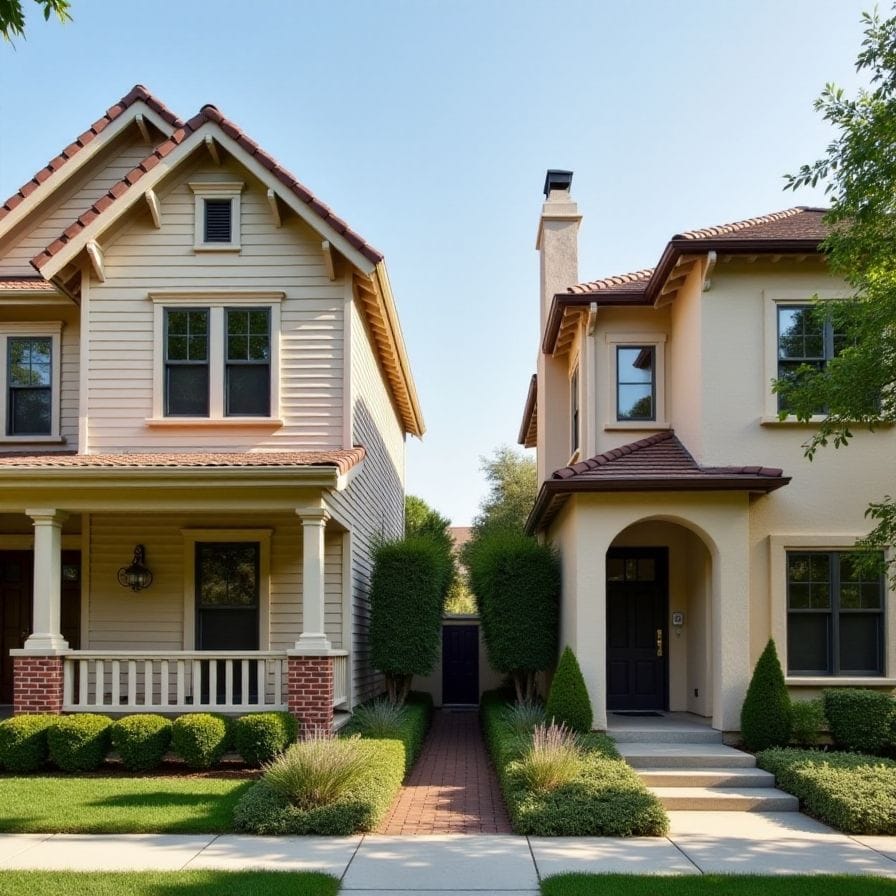
As you weigh this important decision, numerous factors come into play: cost differences, customization options, maintenance requirements, neighborhood development, and long-term value. What works for one family might not suit another’s needs or financial situation. Throughout this comprehensive guide, we’ll examine the key aspects of both new construction and existing homes to help you determine which path aligns with your specific goals, timeline, and budget.
- Cost Comparison: New Construction vs Existing Homes
- Customization and Design Options
- Maintenance and Repairs
- Location and Neighborhood Considerations
- Energy Efficiency and Environmental Impact
- Investment Potential and Resale Value
- Timeframe and Buying Process
- Personal Preferences and Lifestyle Considerations
- Frequently Asked Questions
- Conclusion: Making Your Choice Between New Construction and Existing Homes
Cost Comparison: New Construction vs Existing Homes
When examining the financial aspects of new construction vs existing homes, several key differences emerge that can significantly impact your investment.
New construction homes typically come with higher upfront purchase prices compared to similar-sized existing properties in the same area. According to recent real estate data, newly built homes command a premium of approximately 10-20% over comparable existing homes. This price difference stems from several factors, including rising construction costs, builder profit margins, and the incorporation of modern features and systems.
However, the initial price tag doesn’t tell the complete financial story. New construction offers potential savings in other areas that might offset the higher purchase price over time. These homes generally require fewer repairs and maintenance during the first several years of ownership. Modern building codes mandate energy-efficient features like better insulation, high-performance windows, and efficient HVAC systems that can lead to substantial utility bill savings each month.
Existing homes present different financial considerations. While their purchase prices are typically lower, buyers should budget for potential updates, repairs, and higher maintenance costs. Many existing homes built decades ago lack modern energy efficiency standards, which can result in higher monthly utility expenses. However, property taxes on existing homes may be lower than on newly built properties in some jurisdictions, providing some ongoing cost relief.
Financing options also differ between these property types. New construction often involves construction loans and builder financing programs that have different terms than conventional mortgages. Some builders offer incentives like closing cost assistance or upgrade allowances that can reduce your out-of-pocket expenses. For existing homes, traditional mortgage products are the norm, but renovation loans exist for properties needing significant updates.
When calculating the true cost of ownership, it’s essential to consider both short-term expenses and long-term financial implications. While the upfront investment in new construction is higher, the reduced maintenance and energy costs might make it more economical over an extended ownership period.
Customization and Design Options
The ability to personalize your living space represents one of the most significant differences between new construction vs existing homes, with each option offering distinct advantages and limitations.
New construction homes provide unparalleled opportunities for customization. Depending on the construction stage when you purchase, you may influence numerous design decisions. Working with a builder early in the process allows you to select everything from the floor plan and room dimensions to specific finishes like flooring, cabinetry, countertops, and fixtures. Semi-custom builders typically offer a base model with various upgrade packages and options, while fully custom builders can create entirely bespoke homes tailored to your precise specifications.
The customization timeline varies based on your entry point in the construction process. Purchasing pre-construction gives you maximum input, while buying a spec home that’s already completed limits your choices to any remaining builder allowances. Most production builders maintain design centers where buyers can view and select from available options, making the customization process more structured and streamlined.
Existing homes present a different approach to personalization. While you can’t change the fundamental layout without renovation, these properties offer immediate opportunities for decoration and gradual customization. Many buyers appreciate the distinctive character elements found in older homes—architectural details like crown molding, wainscoting, built-ins, or historical features that aren’t commonly replicated in new construction.
Renovation projects in existing homes allow for personalization over time, giving homeowners the flexibility to spread costs across years rather than making all design decisions upfront. This approach lets you live in the space first, understanding how you use it before committing to changes. However, renovations often uncover unexpected challenges and costs, particularly in older properties where structural issues, outdated electrical systems, or plumbing problems might lurk behind walls.
The emotional aspect of customization differs between these options as well. New construction offers the satisfaction of creating a space that perfectly matches your vision from the start, while existing homes provide the creative fulfillment of transformation and preservation. Your personal preference for immediate perfection versus evolutionary improvement plays a key role in determining which path better suits your temperament and lifestyle.
Maintenance and Repairs
The maintenance equation differs dramatically when comparing new construction vs existing homes, affecting both your time investment and ongoing budget requirements.
New construction homes offer a significant advantage in reduced maintenance needs during the first several years of ownership. These properties feature brand-new systems, appliances, and structural elements that typically perform reliably with minimal attention beyond routine care. Most newly built homes come with warranties that provide valuable protection: builder warranties typically cover workmanship for one year, major systems for two years, and structural elements for up to ten years. Additionally, new appliances, HVAC systems, roofing, and other components carry their own manufacturer warranties, creating multiple layers of protection against unexpected repair costs.
The building materials and systems in new construction generally incorporate recent technological advancements. Modern HVAC systems require less frequent servicing while delivering better performance. Plumbing utilizing PEX or other contemporary materials resists leaks and corrosion better than older pipes. Window, door, and insulation technologies have dramatically improved energy retention compared to homes built decades ago. These advancements translate to fewer maintenance headaches and repair emergencies.
Existing homes present a more complex maintenance picture. These properties have already weathered the test of time, revealing any construction flaws or settling issues. This transparency allows buyers to understand exactly what they’re acquiring through proper home inspections. However, existing homes require more proactive maintenance planning. Major systems like roofing, HVAC, plumbing, and electrical components may be approaching or exceeding their expected lifespans, necessitating budgeting for replacements rather than simple repairs.
The maintenance learning curve differs between these options as well. With new construction, you’ll likely have documentation for all systems and appliances, but might lack knowledge about how they interact or potential weak points in the construction. Existing homeowners often benefit from the previous owner’s knowledge transfer regarding the property’s quirks and maintenance history, though this information isn’t always comprehensively shared.
Financial planning for maintenance varies significantly between these property types. New construction typically requires minimal maintenance budgeting in early years, with costs gradually increasing as warranties expire and systems age. Existing homes demand more substantial maintenance reserves from the outset, with potential large-scale replacements needed within the initial years of ownership depending on the property’s age and condition.
Location and Neighborhood Considerations
The neighborhood context presents stark contrasts when weighing new construction vs existing homes, with each option offering distinct community dynamics and location attributes.
New construction developments typically occupy peripheral locations where land remains available and affordable for large-scale building projects. These areas often feature expanding infrastructure, with newer schools, shopping centers, and amenities being developed concurrently with housing. The community atmosphere in new developments evolves as homeowners move in simultaneously, creating opportunities to establish relationships with neighbors at similar life stages. However, these neighborhoods may lack mature landscaping, sidewalks, or established community gathering places during the initial years.
The commute factor often impacts new construction homebuyers significantly. Suburban and exurban locations can mean longer travel times to urban employment centers and established cultural attractions. While some new developments incorporate mixed-use planning with commercial spaces integrated into residential areas, many require driving to reach everyday necessities. Buyers should carefully evaluate their transportation priorities and daily routines when considering these locations.
Existing homes offer contrasting neighborhood advantages. These properties typically reside in established areas with mature trees, developed parks, and functional infrastructure already in place. The neighborhood character has been formed over decades, providing prospective buyers with transparency about community dynamics before making a purchase decision. Proximity to city centers and employment hubs represents a significant advantage for many existing properties, potentially reducing commute times and transportation costs.
School districts often factor heavily into location decisions for families with children. While new developments may feature newer school facilities, existing neighborhoods have established educational reputations and performance records that buyers can research thoroughly. The stability of school boundaries and attendance zones typically offers more predictability in established areas compared to developing regions where school assignment policies might change as populations grow.
Community amenities differ between these options as well. New developments frequently include planned amenities like community pools, clubhouses, fitness centers, or walking trails that appeal to contemporary lifestyle preferences. Established neighborhoods may offer more diverse local businesses, unique community traditions, and public spaces that have evolved based on resident needs over many years.
The investment potential varies significantly depending on location factors. New construction in rapidly growing areas may appreciate quickly as the region develops, while existing homes in desirable established neighborhoods often hold value steadily due to land scarcity and location advantages. Your long-term plans for the property should influence which neighborhood characteristics align best with your financial goals.
Energy Efficiency and Environmental Impact
The sustainability profile differs considerably when analyzing new construction vs existing homes, with implications for both environmental impact and operating costs.
New construction incorporates contemporary building standards that prioritize energy efficiency. Modern building codes mandate higher insulation values, better air sealing, and more efficient mechanical systems than those required in previous decades. These homes typically feature energy-efficient windows with low-E coatings and improved weatherstripping that reduce thermal transfer. HVAC systems in new construction achieve higher SEER ratings and AFUE percentages, delivering better performance with less energy consumption. Additionally, newer appliances, lighting, and water fixtures meet current efficiency standards that substantially reduce resource usage compared to older models.
Many newly built homes incorporate smart home technology that further enhances efficiency through programmable thermostats, automated lighting controls, and systems that optimize energy usage based on occupancy patterns. Some new developments include solar panel integration or pre-wiring for future installation, reflecting growing consumer interest in renewable energy sources. These features collectively reduce the carbon footprint of new homes while providing significant monthly utility savings for homeowners.
Existing homes present different environmental considerations. While older properties may lack modern efficiency features, they represent structures where the environmental impact of construction materials and processes has already occurred. Renovating an existing home to improve efficiency rather than building new can prevent substantial resource consumption and waste generation. Upgrades like additional insulation, window replacements, or HVAC modernization can dramatically improve the performance of older homes while preserving their embodied energy—the energy already invested in their original construction.
Historic preservation experts often note that “the greenest building is the one already built,” highlighting how maintaining existing structures can be more environmentally responsible than new construction in some contexts. However, bringing older homes up to contemporary efficiency standards requires thoughtful investment and may never achieve parity with new construction in certain performance metrics.
Health considerations related to indoor air quality vary between these options as well. New construction typically uses materials with lower VOC emissions and incorporates ventilation systems designed for current health standards. Existing homes might contain older materials with higher emission levels, though many concerning substances like lead paint or asbestos have been identified and can be professionally remediated during renovation projects.
Your personal environmental priorities—whether minimizing energy consumption, reducing new resource usage, or preserving existing structures—should guide which option better aligns with your sustainability values.
Investment Potential and Resale Value
The long-term financial outlook presents important distinctions when evaluating new construction vs existing homes as investment vehicles.
New construction properties typically experience depreciation during the initial ownership years as the “new home premium” diminishes and the property begins competing with newer developments. Like new cars that lose value upon leaving the dealership, newly built homes often undergo a similar adjustment once the builder completes the community and promotional pricing ends. However, homes in desirable new developments with strong amenities and good school districts may overcome this pattern if the area experiences sustained population growth and housing demand.
The appreciation curve for new construction depends heavily on location factors, builder reputation, and broader market conditions. Properties built by established developers with track records for quality construction typically maintain better value than those from less reputable builders. Similarly, homes with timeless designs rather than trendy features tend to appeal to future buyers across longer timeframes. Smart builders incorporate flexible spaces that can adapt to changing lifestyle needs, enhancing long-term marketability.
Existing homes present different investment characteristics. These properties have already weathered initial depreciation periods and established their market position. Homes in desirable established neighborhoods with limited new construction potential often appreciate steadily due to fixed supply and continued demand. The land value component typically represents a larger percentage of the total property value in older homes, providing a hedge against depreciation since land historically appreciates more reliably than structures.
Renovation investments in existing homes can yield different returns depending on project selection and execution quality. Kitchen and bathroom updates typically recoup 60-80% of their costs in increased home value, while maintenance-focused improvements like roof replacements or HVAC upgrades generally return less in immediate value but prevent larger value deterioration. Strategic improvements that bring an older home’s functionality closer to new construction standards without sacrificing its character can position it competitively against newer properties.
Market timing impacts these property types differently as well. During housing booms with limited inventory, existing homes often appreciate faster due to immediate availability. During slower markets, new construction may offer more competitive pricing and incentives as builders work to maintain sales velocity. Understanding your local market cycle helps determine which option presents better investment potential when you purchase.
Your anticipated ownership duration significantly influences which option might perform better financially. If you plan to stay in the home for five years or less, the transaction costs and potential early depreciation of new construction could outweigh benefits. For longer ownership periods of ten years or more, the reduced maintenance costs and energy efficiency of new construction might produce better financial outcomes despite higher initial prices.
Timeframe and Buying Process
The purchasing journey differs substantially between new construction vs existing homes, affecting both your timeline expectations and the complexity of the transaction.
New construction involves an extended timeline that varies based on whether you’re purchasing a production home, semi-custom, or fully custom property. Production builds typically require 4-6 months from contract to completion, while semi-custom homes average 6-12 months. Fully custom homes may take 12-24 months or longer depending on design complexity, permitting requirements, and construction challenges. This extended timeline requires buyers to plan housing transitions carefully, potentially managing temporary accommodations between selling an existing property and occupying the new construction.
The contract structure for new homes differs significantly from resale transactions. Builder agreements typically favor the developer with limited contingencies, substantial deposits, and construction milestone payment schedules. Buyers should review these contracts carefully with real estate attorneys who specialize in new construction. Builder contracts often include provisions allowing substitution of materials if supply chain issues arise, which can impact the final product quality or appearance.
The emotional journey through new construction includes exciting design selections but also potential stress points during construction delays, inspection findings, or finish quality issues. Managing expectations throughout this process helps buyers maintain perspective when inevitable complications arise. Having independent inspections at foundation, pre-drywall, and completion stages provides valuable quality assurance beyond municipal code inspections.
Existing home purchases follow a more established and typically faster process. The transaction timeline generally spans 30-60 days from accepted offer to closing, allowing for quicker housing transitions. However, competitive markets may require multiple offers before securing a property, extending the overall house-hunting phase. Contingency structures in resale transactions provide more buyer protections through financing, inspection, and appraisal conditions that allow exit points if issues arise.
The inspection process for existing homes reveals current condition rather than monitoring construction quality. These inspections cover the entire property simultaneously rather than the phased approach used in new construction. Buyers of existing homes should budget for both inspection costs and potential negotiation phases that address identified issues either through seller repairs or price adjustments.
Financing mechanisms also differ between these property types. New construction often involves construction loans that convert to permanent mortgages, bridge financing for buyers selling existing homes, or builder-affiliated lender incentives that reduce closing costs in exchange for using preferred financing sources. Existing home purchases typically use conventional, FHA, or VA mortgages without the complexity of construction-phase funding.
Your personal tolerance for process complexity and timeline uncertainty should influence which path better matches your temperament and life circumstances. Some buyers prefer the controlled, predictable nature of existing home purchases, while others value the creative input and customization opportunities that justify new construction’s extended timeline.
Personal Preferences and Lifestyle Considerations
Beyond financial and practical factors, subjective preferences play crucial roles when deciding between new construction vs existing homes, with each option supporting different lifestyle priorities.
New construction appeals to buyers who prioritize modern layouts optimized for contemporary living patterns. These floor plans typically feature open-concept designs with visual connections between kitchen, dining, and living spaces that facilitate both entertainment and family interaction. Primary suites in new homes often include spacious bathrooms and walk-in closets that older homes may lack without significant renovation. Technology integration comes standard in many new properties, with built-in wiring for high-speed internet, smart home systems, and entertainment configurations that require retrofitting in older structures.
The clean-slate quality of new construction attracts buyers who prefer moving into untouched spaces without inheriting previous owners’ design choices or maintenance patterns. These properties eliminate concerns about lingering odors, deep-cleaning requirements, or allergens that might persist in previously occupied homes. For those with specific health sensitivities or strong preferences for pristine living environments, new construction offers peace of mind that can’t be replicated in resale properties.
Existing homes appeal to different lifestyle priorities. These properties often feature architectural character and craftsmanship details that modern construction methods rarely include due to labor costs and changing building techniques. Elements like hand-carved woodwork, plaster walls, stained glass accents, or unique architectural features provide aesthetic satisfaction for those who appreciate historical design. Established neighborhoods typically offer mature landscaping with full-grown trees providing shade and privacy that new developments won’t achieve for decades.
The sense of history and continuity attracts many buyers to older homes. Properties that have sheltered previous generations carry stories and connections to community history that new construction cannot provide. Some buyers find meaning in becoming stewards of historical properties, preserving architectural heritage while adapting spaces for contemporary living. This emotional connection to a home’s past represents a significant value component that transcends practical considerations for many existing home enthusiasts.
Privacy considerations differ between these housing types as well. New developments often feature homes built closer together with less established natural screening between properties. Existing neighborhoods generally evolved during eras with different density expectations, potentially offering larger lots and better separation from neighbors. However, older homes might lack modern soundproofing techniques, potentially allowing more noise transmission between rooms or floors compared to new construction with current acoustic insulation standards.
Your daily routines and lifestyle patterns should influence which option better supports your needs. If you entertain frequently, new construction’s open layouts and modern kitchens might better accommodate gathering spaces. If you work from home, existing homes might offer dedicated office spaces or convertible formal dining rooms that provide better separation from household activities. Evaluating how you actually use living spaces helps determine which property type better aligns with your specific lifestyle requirements.
Frequently Asked Questions
Is it better to buy new construction or resale?
The better choice depends on your specific priorities and circumstances. New construction offers customization, modern features, and lower initial maintenance, but comes with higher prices and potential construction delays. Existing homes typically cost less upfront, provide established neighborhoods, and allow immediate occupancy, but may require more maintenance and updates. Your budget, timeline, location preferences, and tolerance for renovation projects should guide this decision.
Why are new construction homes cheaper in some areas?
When new construction appears less expensive than existing homes, several factors may be at play. The homes might be smaller, located in less established areas with longer commutes, built with more economical materials, or situated on smaller lots. Additionally, some builders offer attractive base prices but charge substantially for upgrades and finishes that come standard in existing homes. Always compare total costs including lot premiums, upgrades, and additional features.
Do new construction homes increase in value?
Like all real estate, new construction homes typically appreciate over time, but they often experience slower appreciation initially as they compete with ever-newer homes being built nearby. After the community is established and amenities are completed, appreciation rates usually normalize. Factors that positively influence appreciation include quality construction, desirable school districts, convenient location, and limited land for future development nearby.
Is a 50-year-old house too old?
A 50-year-old house isn’t inherently “too old” if it has been properly maintained. Homes built in the 1970s often feature solid construction with potential advantages like larger lots and more established neighborhoods. However, these properties may need updates to electrical systems, plumbing, insulation, and energy efficiency features. A thorough home inspection can identify any critical issues that might require significant investment. Many buyers find that older homes with good “bones” provide excellent value after strategic updates.
How much money do you need upfront to build a house?
Building a custom home typically requires substantial upfront capital. Most construction lenders require 20-25% down payment on the total projected cost (land plus construction). Additionally, you’ll need funds for architectural plans, permits, impact fees, and contingency reserves for unexpected costs during construction. Many builders of production homes require non-refundable deposits of $5,000-$25,000 plus additional payments at construction milestones. Total upfront costs commonly range from 25-30% of the project’s total value.
Is it cheaper to build up or down on new construction?
Building outward on a single level is typically most economical, as foundations and roofing represent significant costs that expand with footprint but don’t multiply with additional same-size floors. Building up (adding second or third floors) usually costs less than building down (finishing basements or adding underground spaces). However, if land costs are high, building vertically becomes more cost-effective as it maximizes living space on a smaller footprint. Local building codes, soil conditions, and property characteristics also influence these costs.
Are modular homes worth it?
Modular homes can offer excellent value when purchased from reputable manufacturers. These factory-built homes typically provide better quality control, faster construction timelines, and potentially lower costs than traditional site-built homes. Modern modular construction has overcome many historical limitations, with designs and finishes comparable to conventional new construction. However, some locations have restrictions on modular homes, and financing can be more complex. Resale value has historically lagged behind site-built homes in some markets, though this gap has narrowed significantly as construction quality has improved.
Are new build houses worth more after they’re built?
Newly completed homes typically don’t immediately increase in value beyond their purchase price unless the broader market is experiencing rapid appreciation. In fact, like new cars, they often undergo slight depreciation once the “new” premium diminishes. The greatest value increases usually occur after the entire development is completed and the community becomes established with maturing landscaping and completed amenities. Homes by builders with excellent reputations tend to hold value better than those from builders focused primarily on production volume.
Do new construction homes have closing costs?
Yes, new construction homes involve closing costs similar to existing home purchases, including lender fees, title insurance, and recording fees. However, these transactions might include additional new-construction-specific costs like impact fees, homeowners association setup fees, or warranty program enrollment. Some builders offer incentives that cover certain closing costs if buyers use preferred lenders. These incentives typically range from 2-3% of the purchase price but may come with less favorable loan terms that could cost more over time.
How do I tell if new construction is quality?
Assessing construction quality requires attention to both visible details and structural elements. Research the builder’s reputation through reviews, previous buyers, and local building officials. Hire independent inspectors for foundation, pre-drywall, and final inspections rather than relying solely on municipal inspections. Examine finish details like even spacing of trim, consistent gaps around doors and windows, and straight moldings. Check less visible elements like even drywall seams, proper flashing around exterior openings, adequate drainage away from the foundation, and consistent temperature throughout the home. Third-party certifications like Energy Star or LEED can indicate attention to quality and performance standards.
Conclusion: Making Your Choice Between New Construction and Existing Homes
The decision between new construction vs existing homes ultimately depends on aligning housing options with your unique combination of priorities, resources, and lifestyle needs. This choice extends beyond simple financial calculations to encompass your values, daily routines, and long-term goals for homeownership.
For those who prioritize customization, modern features, and minimal initial maintenance, new construction offers compelling advantages despite higher upfront costs and extended timelines. The peace of mind that comes with warranties, energy-efficient systems, and contemporary designs appeals to many buyers willing to accept peripheral locations or developing neighborhoods.
Existing homes continue attracting buyers who value established communities, architectural character, and potential value appreciation in proven locations. The immediate availability and typically lower initial investment make these properties accessible to more buyers, while the opportunity for gradual personalization through renovation projects appeals to those who enjoy home improvement processes.
Most importantly, recognize that neither option represents an objectively superior choice. The “right” decision varies based on market conditions, available inventory, your financial situation, and personal preferences. Taking time to thoughtfully evaluate both options through the lenses of lifestyle compatibility, financial sustainability, and long-term satisfaction increases your chances of making a housing choice you’ll appreciate for years to come.
As you continue your homebuying journey, consider consulting professionals who specialize in your preferred property type—whether new construction specialists or agents experienced with historical homes in established neighborhoods. Their expertise can help you navigate the specific challenges and opportunities each path presents, ultimately leading to a home that truly meets your needs.


