
Budget apps promise to revolutionize your finances, but research from the Federal Reserve shows that 73% of Americans still struggle with budgeting despite using digital tools. Instead of simplifying money management, many budget apps make budgeting harder through feature overload and unrealistic expectations.
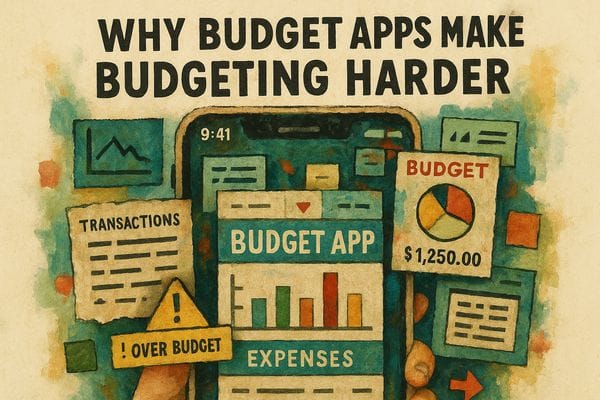
Too Many Features Create Analysis Paralysis
Personal finance apps often overwhelm users with dozens of categories, subcategories, and tracking options. You start wanting to track your spending but end up drowning in choices.
You could spend hours categorizing every coffee purchase while missing bigger financial picture issues. The apps turn budgeting into a full-time accounting job rather than a simple spending awareness tool.
Most people need to track maybe five categories: housing, food, transportation, entertainment, and savings. Yet popular budgeting tools offer 50+ categories with endless customization options.
Rigid Categories Don’t Match Real Life
Money management software assumes your spending fits neat digital boxes. Real life doesn’t work that way. That grocery store trip included dog food, birthday gift, and dinner ingredients—which category does that target in your budget? Some of it could be considered holiday shopping, after all. The app demands precision that everyday spending doesn’t naturally provide.
Financial tracking apps penalize you for normal human behavior. They make you worry about incorrectly categorizing your spending, making you think you’re not getting a clear picture.
Constant Notifications Kill Motivation
Budget planning tools can bombard you with alerts, reminders, and warnings. These digital budgeting interruptions create anxiety around money rather than healthy awareness. Instead of learning spending patterns, you’re constantly stressed about arbitrary limits.
The apps train you to fear spending rather than understand it. That’s backwards from effective money management.
Manual Entry Requirements Are Unrealistic
Despite promises of automation, most financial apps require significant manual work. You must categorize transactions, split expenses, and constantly update information.
Expense tracking becomes a chore that competes with actual money management priorities. You spend more time managing the app than managing your money.
People abandon budgeting tools within months because maintenance requirements exceed practical benefits. The apps become digital clutter rather than helpful resources.
Simple Alternatives Work Better
Effective budgeting doesn’t require complex software. A simple spreadsheet or even pen-and-paper tracking often produce better results than sophisticated apps.
The 50/30/20 rule works without any app: 50% needs, 30% wants, 20% savings. You can track this with basic math and occasional check-ins.
Many successful budgeters use simple methods like envelope budgeting or automated transfers. These approaches focus on behavior change rather than detailed transaction analysis.
The best advice I can provide isn’t about which specialized budgeting app to use. For the most painless budgeting experience, use one credit card for all spending (with the exception of things that require an ACH transaction, like mortgages, utility bills, and car payments), and then use the categories defined by your bank’s app. This will show you at a glance how much you’re spending in each category over time. Don’t worry about things being allocated to the right categories—it’s the numbers that matter. Check it after the end of each month, and adjust your habits accordingly.
The Psychology Problem Behind Digital Tools
Budgeting difficulties often stem from psychological barriers that apps can’t address. These tools focus on tracking mechanics while ignoring emotional spending triggers and behavioral patterns.
You might perfectly categorize every transaction while still overspending on impulse purchases. The app shows you what happened but doesn’t help prevent future money management challenges.
Financial apps create a false sense of control. Detailed tracking feels productive, but it doesn’t necessarily change spending behavior or improve financial outcomes.
When Apps Actually Help
Some people do benefit from digital budgeting tools, particularly those who enjoy data analysis and have consistent income patterns. Apps work best for detail-oriented individuals who find tracking genuinely helpful and interesting rather than burdensome.
Automated savings features and bill reminders provide genuine value. These background functions don’t require constant user interaction but deliver practical benefits.
Simple budgeting tools that focus on high-level spending trends rather than transaction-level detail often succeed where complex apps fail.
Budget apps make budgeting harder by prioritizing features over functionality. They transform simple money awareness into complex data entry tasks that create stress rather than financial clarity.
Most people benefit more from basic money management principles than sophisticated tracking tools. Focus on building sustainable spending habits through simple methods rather than mastering complicated budgeting software. Sometimes the old-fashioned approaches work better than the latest gadget.


