
The average retail credit card currently charges a record-high 30.45 percent APR, according to recent data from Bankrate. Compare that to general credit cards averaging around 22%, and you’ll quickly see why store credit cards are usually a bad deal for most consumers, whether they’re aware of it or not. And these rates have been climbing steadily.
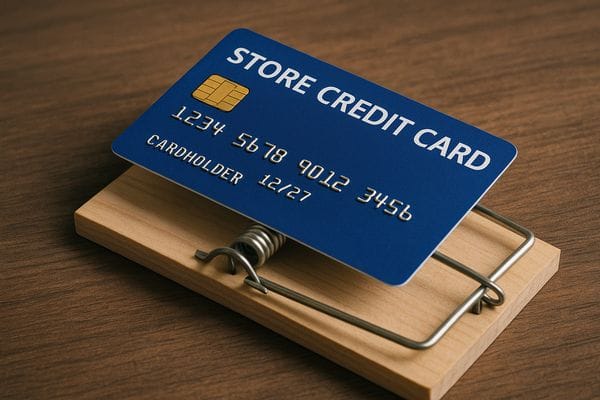
Store Card Interest Rates Are Sky-High
The numbers don’t lie when it comes to retail credit cards. Among store-only credit cards—also known as closed-loop cards—the average is 31.80 percent. Even co-branded store cards that work anywhere average 29.09%.
Just a few years ago, 30% was considered an unofficial ceiling for store cards. Now, that barrier has been shattered completely.
Think about what this means for your wallet. If you carry a $1,000 balance on a store card with a 30% APR, you’ll pay roughly $300 in interest over a year.
Deferred Interest Traps Are Common
Many store cards offer what sounds like a great deal upfront. You’ll see promotions like “0% interest for 12 months” plastered everywhere during checkout.
But here’s the catch: these are usually deferred interest promotions, not true 0% APR offers. If you don’t pay off the entire balance before the promotional period ends, you get hit with retroactive interest.
That means you’ll owe interest on the full original purchase amount, calculated from day one. This can turn a small remaining balance into a massive debt overnight.
General purpose credit cards with 0% intro APR periods work differently. They only charge interest going forward on any remaining balance.
Limited Rewards and Flexibility
Store card rewards might seem appealing at first glance. Some offer 5% back when shopping at that specific retailer.
But these rewards come with serious limitations. You can typically only redeem them at that one store or chain. Compare that to cash back cards that let you use your rewards anywhere.
The math often doesn’t work in your favor either. If you carry even a small balance, the high interest charges will quickly eat up any rewards you earn.
Better Alternatives Exist
Instead of store cards, consider these options:
- General rewards cards: Many offer 2% cash back on all purchases with no restrictions
- Category cards: Rotating 5% categories often include department stores
- 0% intro APR cards: True promotional rates without deferred interest traps
These alternatives typically offer lower ongoing APRs, better rewards flexibility, and more consumer protections.
When Store Cards Might Make Sense
I won’t say store credit cards are never worth it. They can work for very specific situations.
If you’re an extremely loyal customer who shops frequently at one retailer and always pay in full, the rewards might add up. The key phrase here is “always pay in full.”
Store cards can also help build credit history if you have limited options. But secured credit cards often provide a safer path to building credit.
The Bottom Line
Store credit cards are usually a bad deal because of their high interest rates and limited flexibility. The average store-only credit card has an average annual percentage rate of 30.45%, significantly higher than the average APR of about 22% for all credit cards.
Before accepting that store card offer at checkout, take time to research better alternatives. Your future self will thank you when you’re not paying 30% interest on everyday purchases.
Focus on finding a general purpose credit card that matches your spending habits and offers reasonable rates. Skip the store cards unless you’re absolutely certain you’ll never carry a balance.