
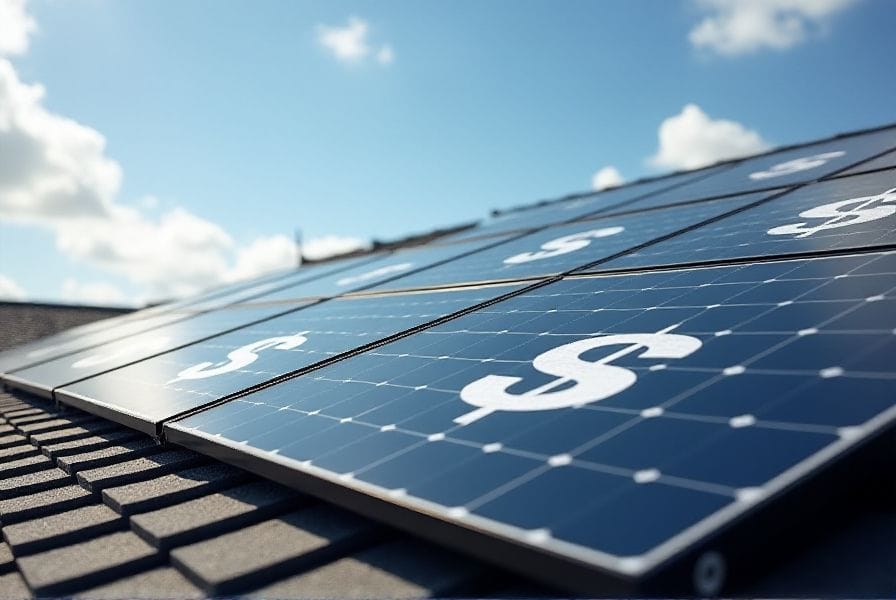
How much can you save with solar panels on your home? The answer might surprise you: the average U.S. homeowner saves around $50,000 over 25 years after installing solar panels, with annual savings of about $1,500. The numbers become even more compelling when you factor in rising electricity costs and available tax incentives. Solar technology has transformed from an expensive novelty into a mainstream investment that delivers substantial long-term financial benefits.
Key Takeaways: Your Solar Savings Potential
- Average lifetime savings – $31,000 to $100,000 over 25 years, with typical homeowners saving around $50,000
- Annual electricity bill reduction – Approximately $1,500 per year for the average household
- Federal tax credit – 30% of total installation costs (potentially ending December 2025)
- Payback period – 6-8 years on average, after which you generate free electricity
- Net system cost – Around $20,552 for an 11 kW system after federal tax credits
- Home value increase – Solar homes sell for an average of $9,974 more than comparable properties
The average cost of an 11 kW solar panel installation is $20,552 after federal tax credits, and homeowners can save anywhere from $31,000 to $100,000 over 25 years. These savings represent real money back in your pocket, making solar panels one of the most effective ways to reduce your monthly expenses while increasing your home’s value.
The solar savings equation depends on several factors including your local electricity rates, system size, available incentives, and energy consumption patterns. Understanding these variables will help you determine exactly how much you can save with solar panels in your specific situation.
Understanding Solar Panel Costs and Initial Investment
Before exploring how much can you save with solar panels, it’s important to understand the upfront investment required. The average cost to install solar panels is around $29,000 before incentives, but this number comes down significantly with generous federal and state incentives.
The cost breakdown typically includes solar panels, inverters, mounting hardware, electrical components, permits, and professional installation. According to the most recent data, the average cost-per-watt across the U.S. is around $2.56/W before incentives. For a typical home requiring an 11 kW system, this translates to approximately $28,160 before any rebates or tax credits.
Several factors influence your total system cost. The complexity of your installation plays a significant role—homes with south-facing roofs that slope at optimal angles and receive full sunlight exposure will have lower installation costs. Your roof’s condition, local permitting requirements, and the specific equipment you choose all impact the final price.
System size directly correlates with both cost and potential savings. Larger systems cost more upfront but generate more electricity, leading to greater long-term savings. Most solar professionals recommend sizing your system to offset 100% of your electricity usage to maximize your return on investment. Zero-down financing options have become increasingly common, allowing homeowners to start saving immediately while paying for their system over time.
The solar industry has experienced dramatic price reductions over the past decade. Installation costs have dropped by over 70% since 2010 as manufacturing has scaled, efficiency has risen, and fierce market competition has emerged. This trend makes solar more accessible than ever before, with payback periods now averaging 6-8 years in most markets.
Federal Tax Credits and Incentives
The federal solar tax credit represents one of the most significant financial incentives for solar adoption. The Residential Clean Energy Credit equals 30% of the costs of new, qualified clean energy property for your home installed anytime from 2022 through 2032. This credit can save the average homeowner thousands of dollars on their solar installation.
On average, a typical solar system shopper saves an extra $8,808 on their solar costs when they claim the federal tax credit. For a $29,000 system, the 30% credit provides $8,700 in tax savings, reducing your net cost to approximately $20,300. The credit applies directly to your tax liability, providing dollar-for-dollar savings rather than just reducing your taxable income.
The federal tax credit covers most costs associated with your solar installation, including equipment, labor, permits, and even battery storage systems. Home battery installation costs, even if the battery is installed without solar panels, also qualify for the credit. This comprehensive coverage ensures you can claim the maximum possible savings on your solar investment.
However, timing matters significantly for this incentive. Congress is currently considering legislation that would eliminate the 30% residential solar tax credit by the end of 2025. While this proposal still requires Senate approval and isn’t yet law, it creates urgency for homeowners considering solar installation. If the legislation passes, systems installed after December 31, 2025, may not qualify for the 30% federal credit.
To claim the credit, you must own your solar system rather than lease it. You must own your solar system to take advantage of the ITC – if you signed a solar lease or PPA, you aren’t eligible for the 30% tax credit. The credit is non-refundable, meaning it can only reduce your tax liability to zero, but unused portions can be carried forward to future tax years.
State and local incentives often complement the federal tax credit. Many states offer additional rebates, tax exemptions, or performance-based incentives that further reduce your solar costs. Some utilities provide rebates for solar installations, though these typically reduce the amount eligible for the federal tax credit.
Calculating Your Monthly and Annual Savings
Understanding how much can you save with solar panels requires examining both immediate bill reductions and long-term financial benefits. Solar panels are an expensive initial investment but provide significant savings on energy bills over time. Your actual savings depend primarily on your current electricity costs and consumption patterns.
Monthly savings begin immediately after your system becomes operational. Most homeowners see their electricity bills reduced to a minimal connection fee or eliminated entirely, depending on their system size and energy usage. Installing solar panels will almost certainly lead to lower average monthly electric bill charges and may even completely eliminate what you owe on your monthly electric bill in some cases.
Net metering programs significantly impact your savings potential. These programs allow you to sell excess electricity back to the grid, earning credits that offset your usage during times when your panels aren’t producing electricity. The value of these credits varies by utility company and state regulations, but they can substantially increase your overall savings.
Annual savings calculations must account for seasonal variations in solar production and electricity usage. Summer months typically generate the highest solar production, while winter months may require more grid electricity. Over a full year, properly sized systems should generate enough electricity to offset most or all of your consumption.
The average 6 kW solar panel system installed anywhere in the country will save you about $1,500 on your electricity bills annually. However, your specific savings will vary based on local electricity rates. Homeowners in areas with high electricity costs, such as California, Hawaii, or the Northeast, typically see greater savings than those in regions with lower utility rates.
Rising electricity costs amplify your solar savings over time. Electricity prices rose an average of 6.2% from 2022 to 2023, according to the U.S. Energy Information Administration. As utility rates continue increasing, your solar panels become more valuable each year, providing protection against future price volatility.
Long-term Financial Benefits and Payback Period
The payback period represents the time required for your solar savings to equal your initial investment. Solar PV systems have a payback period of 6-8 years, after which your system generates free electricity for the remainder of its lifespan. Most solar panels come with 25-year warranties, providing decades of savings beyond the payback period.
Long-term savings calculations reveal the true value of solar investment. Homeowners typically save between $31,000 and $100,000 over the lifetime of their solar panel system, with some cases reaching upwards of $100,000 over 25 years. These substantial savings make solar one of the best long-term investments available to homeowners.
Several factors influence your payback period and lifetime savings. Higher local electricity rates lead to faster payback periods and greater long-term savings. Larger systems that offset more of your electricity usage provide better returns on investment. Available incentives, including federal tax credits and state rebates, significantly reduce payback periods.
Solar panels also increase your home’s resale value. A 2019 Zillow analysis discovered that U.S. homes employing solar systems sold for an average of $9,974 more than comparable traditionally powered houses. This value increase, combined with ongoing energy savings, provides multiple financial benefits.
The reliability of modern solar technology supports these long-term projections. Solar panels degrade slowly over time, typically losing only 0.5% to 0.8% of their efficiency annually. After 25 years, quality panels still operate at approximately 85% of their original capacity, ensuring continued savings throughout their warranty period.
Financing options can accelerate your path to savings. Cash purchases provide the fastest payback and highest lifetime savings, but solar loans allow you to start saving immediately while spreading the cost over time. Many solar loans offer terms that result in monthly payments lower than your previous electricity bills, providing immediate positive cash flow.
Factors That Affect Your Solar Savings
Geographic location significantly impacts how much can you save with solar panels. The amount that you’ll save depends on where you live, with factors including solar irradiance, local electricity rates, and utility policies affecting your potential returns. States with high electricity costs and excellent solar resources typically offer the best savings opportunities.
Your roof’s characteristics directly influence system performance and savings. South-facing roofs with optimal tilt angles receive the most sunlight throughout the day, maximizing electricity production. Roofs with minimal shading from trees, buildings, or other obstructions generate more electricity and provide better savings. The age and condition of your roof may also affect installation costs and system design.
Energy consumption patterns affect your solar savings calculations. Households with high electricity usage during daylight hours benefit most from solar panels, as they can use the electricity as it’s generated. Families with significant evening electricity usage rely more heavily on net metering programs to maximize their savings potential.
System size and component quality impact both upfront costs and long-term savings. A higher kW system could save you more money over time by producing more energy. Premium panels and inverters typically cost more initially but offer better efficiency, longer warranties, and greater reliability over time.
Local utility policies significantly affect your savings potential. Net metering programs, time-of-use rates, and interconnection policies vary widely between utilities. Some utilities offer generous net metering credits, while others have less favorable policies. Understanding your utility’s specific programs helps you accurately calculate potential savings.
Maintenance requirements generally don’t significantly impact savings calculations. Solar panels require minimal maintenance beyond occasional cleaning and annual inspections. Most systems operate reliably for decades with minimal intervention, ensuring that maintenance costs don’t erode your savings.
Weather patterns and seasonal variations affect year-to-year savings but generally average out over time. Solar panels produce electricity even on cloudy days, though at reduced levels. Snow, rain, and storms may temporarily reduce production, but annual totals typically meet projections in most climates.
State-by-State Savings Comparison
Solar savings vary dramatically across different states due to electricity rates, solar incentives, and sun exposure levels. California accounts for 38.9% of U.S. capacity and 31.7% of solar jobs, largely due to favorable policies and high electricity rates that make solar particularly attractive.
California has the highest cost of solar installation at $11,278 but could save $60,000 to $100,000 over 25 years. Despite higher installation costs, California homeowners benefit from excellent solar resources, high electricity rates, and comprehensive state incentives. Net metering policies, though recently modified, still provide substantial value for solar adopters.
Alaska has the lowest cost of solar installation at $9,956, though savings potential is limited by reduced solar irradiance and lower electricity rates in some areas. However, remote areas of Alaska with high electricity costs can still achieve excellent returns on solar investments.
Northeastern states often provide strong savings opportunities despite lower solar irradiance. High electricity rates in states like Massachusetts, New York, and Connecticut create attractive economics for solar adoption. These states also offer robust incentive programs that enhance federal tax credits.
Southern and southwestern states benefit from excellent solar resources and increasingly competitive electricity markets. States like Texas, Arizona, and Nevada combine high solar irradiance with growing electricity demand, creating favorable conditions for solar savings. Texas led all states in new installations in Q1 2025 with 2.6 GW of new installed capacity.
Emerging markets show promise for future growth. Emerging state markets like Florida, Texas, and Illinois will drive growth in the second half of the 2020s. These states are developing supportive policies and seeing increased solar adoption as costs continue declining.
Midwest states present mixed opportunities depending on local policies and electricity rates. States with deregulated electricity markets often provide better conditions for solar adoption, while others lag due to low electricity rates or limited incentive programs. However, federal tax credits make solar attractive in most locations.
Mountain West states generally offer excellent solar resources and growing market opportunities. States like Colorado, Utah, and New Mexico combine high solar irradiance with supportive policies. Rural areas in these states often have limited electricity options, making solar particularly valuable for energy independence.
Frequently Asked Questions
How much is a solar system for a 2000 sq ft house?
The average cost of an 11 kW solar panel installation is $20,552 after federal tax credits. For a 2000 square foot house, you typically need a 10-12 kW system, putting the cost around $18,000-$22,000 after the 30% federal tax credit. The exact size depends on your electricity usage, roof characteristics, and local solar irradiance levels.
Why aren’t my solar panels saving me money?
Several factors can limit solar savings: undersized systems that don’t offset enough electricity usage, unfavorable net metering policies, shading issues reducing production, or equipment problems affecting performance. Time-of-use rates can also impact savings if your usage patterns don’t align with solar production. Contact your installer to analyze your system’s performance and identify potential issues.
How long do solar panels take to pay for themselves?
Solar PV systems have a payback period of 6-8 years on average. Your specific payback period depends on system cost, local electricity rates, available incentives, and energy consumption. Areas with high electricity costs and good solar incentives achieve faster payback periods, sometimes as short as 4-5 years.
How much is solar per month?
Monthly solar costs depend on your financing method. Cash purchases eliminate monthly payments after installation. Solar loans typically range from $100-$300 monthly for average systems, often less than your previous electricity bill. Many solar loans offer terms that result in monthly payments lower than your previous electricity bills, providing immediate positive cash flow.
Are solar panels tax deductible?
Solar panels qualify for the federal Residential Clean Energy Credit, not a deduction. The credit equals 30% of installation costs and directly reduces your tax liability dollar-for-dollar. This provides greater value than a deduction since it reduces taxes owed rather than just taxable income. The credit is available through 2032, though proposed legislation could end it after 2025.
What is the break even point for solar panels?
The break-even point occurs when cumulative savings equal your initial investment. For most homeowners, this happens within 6-8 years after installation. Factors affecting break-even timing include system cost, electricity rates, financing terms, and available incentives. After reaching break-even, your system generates free electricity for the remaining warranty period.
Is it worth paying off solar panels?
Paying off solar panels early can increase long-term savings by eliminating loan interest charges. However, if your loan has favorable terms or tax benefits, investing the cash elsewhere might provide better returns. Consider your loan’s interest rate, available investment opportunities, and personal financial goals when making this decision.
How long do solar panels last?
Most solar panels come with 25-year performance warranties and can operate effectively for 30+ years. Solar panels degrade slowly over time, typically losing only 0.5% to 0.8% of their efficiency annually. After 25 years, quality panels still operate at approximately 85% of their original capacity, continuing to provide electricity and savings well beyond their warranty period.
Conclusion
Understanding how much can you save with solar panels reveals compelling financial benefits that extend far beyond simple electricity bill reduction. The average U.S. homeowner saves around $50,000 over 25 years after installing solar panels, making solar one of the most effective long-term investments available to homeowners. These savings become even more attractive when you consider rising electricity costs and the protection solar provides against future rate increases.
The combination of declining installation costs, generous federal tax credits, and improving technology has created an unprecedented opportunity for solar adoption. The average homeowner saves almost $10,000 with the federal tax credit alone, significantly reducing the payback period and enhancing long-term returns. However, potential changes to federal incentives make timing an important consideration for prospective solar adopters.
Your specific savings potential depends on multiple factors including local electricity rates, available incentives, system size, and energy consumption patterns. The best way to determine exactly how much you can save with solar panels is to obtain quotes from reputable installers who can analyze your specific situation and provide customized projections.
Solar panels represent more than just an energy solution—they’re a hedge against rising electricity costs, an investment in your home’s value, and a step toward energy independence. With payback periods averaging 6-8 years and systems lasting 25+ years, the long-term financial benefits far outweigh the initial investment. Take action today to explore solar options for your home and start your journey toward substantial energy savings.